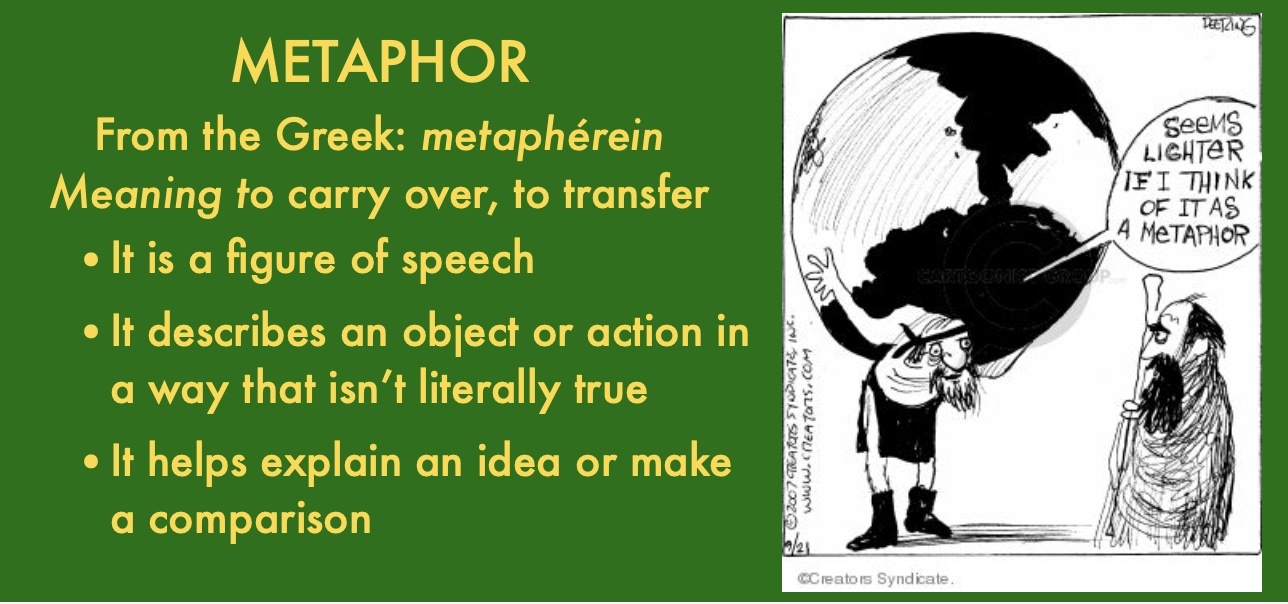
At the beginning of the Masters of Practical Theology program, I was invited to create a metaphor that spoke to how I see practical theology fitting within my ministerial context. That is when I explored the idea that we all are misfits for Christ, which you see on the right column. Then as I matriculated through the program, still exploring my calling towards pastoral ministries within transitional contexts, I began to think about the role Moses played in moving an entire people from one state of being to another while also bringing them from one land of oppression and into one of promise and hope. I am still formulating this new metaphor in the left column.
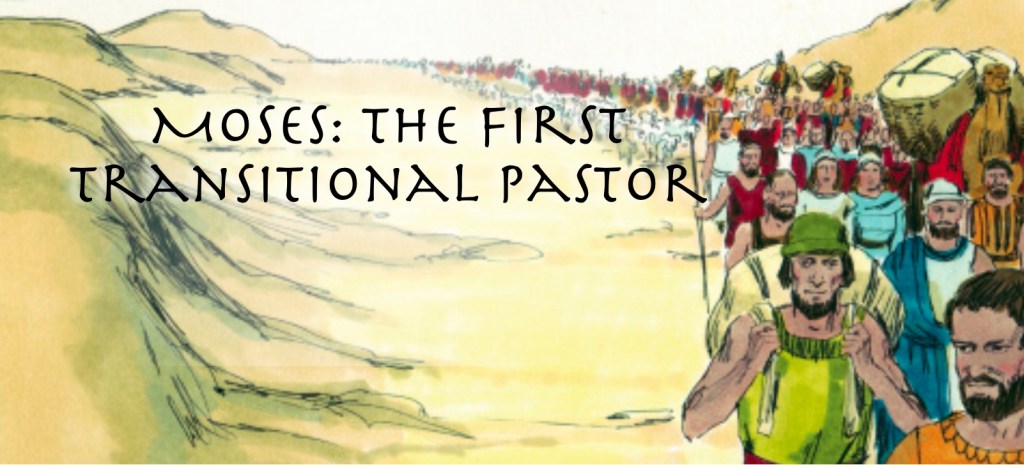
What was Moses to the people of Isreal? The debate is ongoing: was he a Judge, prophet, or King? It seems that Moses could be claimed as the first Transitional Pastor. He was chosen by God to lead the people out of Egypt and to the land flowing with milk and honey. Moses would only be able to get the people to the point where they were ready to cross over, but Moses wouldn’t get to go with them. I believe the way Moses led the Israelites works well as a metaphor for a pastor for communities in transition.
Moses is the one who takes God’s people from Egypt to the land God had promised them. This was of course a major transition, taking forty years. Although it is rare for pastoral ministries to have that sort of longevity, the story of the exodus helps us understand what a transitional pastor does.
- Just as the Israelites were led through the wilderness by Moses, transitional pastors lead congregations through their own wildernesses, guiding them into a new way of life together.
- Just as Moses helped the Israelites work through their stages of grief, a transitional pastor supports congregations as they mourn and grieve their losses and find ways to keep moving forward in the search for the promise of something new.
- Just as Moses heard the murmurs and complaints of the Israelites, a transitional pastor listens to the people and hears their concerns, and works with them to create an understanding of how to move forward.
- Just as Moses listened to the counsel of his elders and trusted advisors, a transitional pastor seeks out the people of the congregation to provide wisdom, guidance, and help in creating a new vision and mission with and for the community.
- Just as Moses prepared the people to enter the Promised Land and was able to get them there but didn’t finish the journey with them, the transitional pastor is only with a congregation for a short time with the task of getting them ready for their new leadership and a new way of living into their new mission, but they say graciously step aside because they completed what God called them to accomplish.
A Transitional Pastor is called to serve a congregation for a certain time with a defined purpose and mission. Traditionally a Transitional Pastor serves with a congregation when they are in-between installed pastors or when the congregation is needing to determine the future realities for revitalization or closure. However, there is also a new reality that many communities of faith are living in times of great transition and most pastors will find themselves doing much of the work of a transitional pastor even if they are called, installed, and intend to stay for a whole season of ministry together. Living into these new realities within faith communities, and helping to guide congregations through times of uncertainty into an unknown way of being church together is hard and scary work. Where we can always find hope is that if like Moses, we continuously seek guidance from God, we will be led to the land God has promised. We will be on the way to help bring God’s new heaven and a new earth into the here and now.

One of my favorite childhood Christmas television specials was Rudolf the Red-Noised Reindeer. My favorite characters were Yukon Cornelius the prospector, Hermey the Elf who wanted to be a dentist, the Abominable Snowman, and, of course, Rudolph. However, there was one part of the special that used to make me uncomfortable and that was the scene when Rudolph and his companions arrive on the Island of Misfit Toys. The scene begins as we are introduced to a variety of outcast toys such as a spotted elephant, a bird that swims, a cowboy that rides an ostrich, a square wheeled caboose, a winged teddy bear, and a sinking boat, and many others. These toys were discarded on the island because they were unwanted because they didn’t fit the norms.
Rudolf, Hermey, and Cornelius could all relate to these toys feeling like they didn’t fit into the norm, but they recognized the value in them that they didn’t see in themselves. Because of Rudolf and his friends, the toys were transformed from an abnormal bunch of misfits into a beloved community that began to recognize the value in their uniqueness, just as Rudolf, Hermey, and Cornelius began to understand their worth because of their differences.
The Beloved Community brings people together, each unique, each in some way abnormal or a misfit. We are called in the Beloved Community to help each other recognize their value, worth, and, most importantly, acceptance within. This image of the Island of Misfits reminds me of Jesus’s parable of the Great Banquet in Luke 14:15-24. The host opens the doors to the banquet to everyone in the town, and when those with honored status choose not to attend, the doors are opened even wider for the outcast and misfits. I am also reminded in Galatians 3:28, that we are reminded that all are welcome and there is no long distinction or difference, for we are all one in Christ Jesus.
In her book, Just Hospitality: God’s Welcome in a World of Difference, The Presbyterian feminist theologian and self-identified misfit, Letty Russell, claims, “Differences of race, gender, sexual orientation, language, or culture are not problems to be resolved and controlled by a dominant group. Rather they are important ways of assuring that God’s gift of riotous diversity in all creation will continue. In fact, these differences are gifts in themselves. God’s gift lets new voices be heard and languages and cultures flourish.” I believe God has always been partial to the misfits, those that make up the diversity in our midst. The Beloved Community is one where all God’s children not only have a purpose but thrive.
 John E. McCrosky